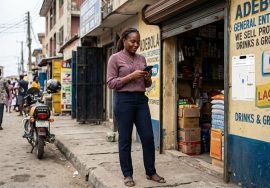
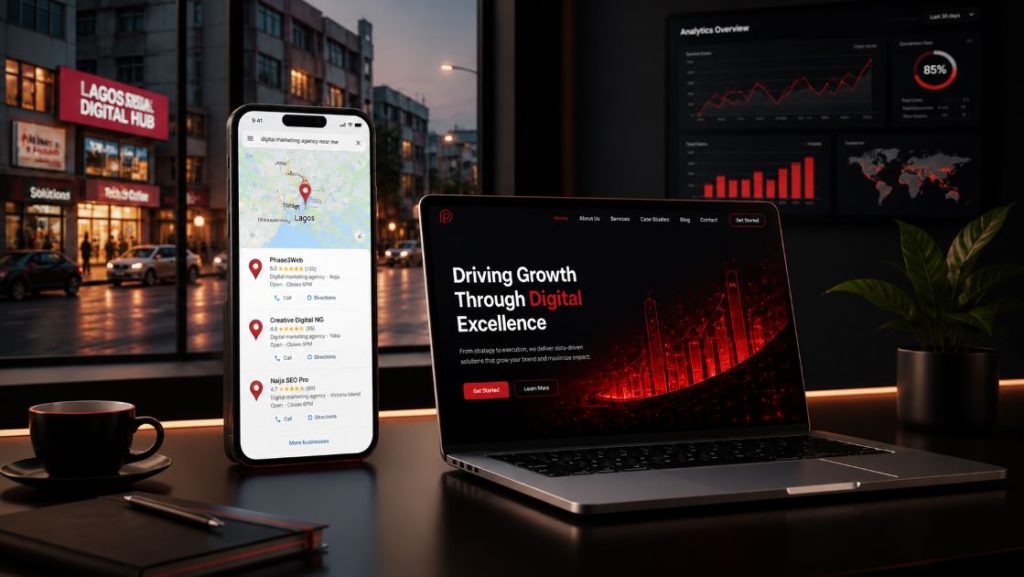
When a customer in Lagos, Abuja, or Port Harcourt searches “restaurant near me,” “plumber near me,” or “clinic in [area],” Google doesn’t just look at who has the best website — it looks at who has the strongest local signals. That’s what Local SEO Nigeria is about: making sure your business shows up, with accurate information, when nearby customers are actively looking for what you offer.
For many Nigerian business owners, this is the most overlooked area of digital marketing. A business can have a beautiful website and still be invisible on Google Maps because its Google Business Profile is unclaimed, its address is inconsistent across directories, or it has no recent reviews. This guide walks through exactly how local search works, what to prioritize, and the mistakes that quietly keep good businesses out of the map pack.
What Is Local SEO, and Why Does It Matter in Nigeria?
Local SEO is the practice of optimizing a business’s online presence so it ranks well in location-based searches — both in regular Google search results and in Google Maps. It matters especially in Nigeria for a few specific reasons:
- Mobile-first search behavior. Most Nigerian internet users search primarily on mobile, where “near me” and map-based results are the default way people find local businesses.
- Address inconsistency across the market. Many Nigerian areas lack standardized street addressing, making NAP consistency both harder to achieve and more valuable when done correctly.
- High competition in dense commercial areas. In cities like Lagos, dozens of similar businesses (salons, pharmacies, restaurants) may operate within the same few streets, making local ranking factors the difference between being found and being invisible.
- Trust-building through reviews. Nigerian consumers frequently rely on Google reviews to vet unfamiliar businesses before visiting or calling, making review management a core part of local business credibility.
How Local Search and the Google Map Pack Work
When someone searches for a local business, Google typically shows a “map pack” — a set of three business listings with a map — above the regular organic results. Google determines which businesses appear here using three main factors:
- Relevance — how well a business profile matches what the searcher is looking for
- Distance — how close the business is to the searcher’s location (or the location they searched)
- Prominence — how well-known and reputable the business is, based on signals like reviews, citations, and backlinks
Understanding these three factors is essential, because most local SEO tactics exist to improve one of them. According to Google’s own guidance on improving local ranking, businesses should keep their information accurate and complete, verify their location, and actively manage reviews — all of which directly influence relevance and prominence.
Core Elements of a Strong Local SEO Strategy
Google Business Profile Optimization
Your Google Business Profile (formerly Google My Business) is the foundation of local SEO. A complete, verified, and regularly updated profile — with correct categories, hours, photos, and services — directly affects whether you appear in the map pack.
NAP Consistency
NAP consistency means your business Name, Address, and Phone number appear identically across your website, Google Business Profile, and every directory or citation. Inconsistent formatting (e.g., “Rd” vs. “Road,” or different phone numbers) confuses Google and weakens ranking signals.
Local Citations and Business Directories
A citation is any online mention of your business’s NAP details — on directories, industry sites, or local platforms. Building citations on relevant, reputable business directories reinforces prominence and trust.
Local Keyword Research
Local keyword research identifies the specific phrases nearby customers use — often combining a service with a location (“hair salon in Lekki,” “generator repair Abuja”) — which should appear naturally in your Google Business Profile description, website copy, and page titles.
Customer Reviews and Reputation Management
Reviews influence both ranking (prominence) and conversion (trust). Actively requesting reviews and responding to all of them — positive and negative — signals an active, trustworthy business to both Google and customers.
On-Site Local Signals
Your website itself should reinforce local relevance: a visible address, embedded Google Map, location-specific service pages (for multi-branch businesses), and structured data marking up your business as a Local Business.
Mobile and Speed Optimization
Since most local searches happen on mobile, a slow-loading site directly hurts local search optimization — both because Google factors page experience into ranking, and because impatient mobile users abandon slow pages before converting.
Local SEO vs. Traditional SEO
| Factor | Local SEO | Traditional (National/Global) SEO |
|---|---|---|
| Primary goal | Rank in map pack and “near me” searches | Rank in general organic search results |
| Key ranking factors | Relevance, distance, prominence (GBP, NAP, reviews) | Content quality, backlinks, technical SEO, authority |
| Main platform | Google Business Profile + Google Maps | Website organic search results |
| Content focus | Location-specific keywords and pages | Broad, topic-based keyword targeting |
| Trust signals | Reviews, citations, local backlinks | Domain authority, editorial backlinks |
| Best suited for | Businesses with a physical location or service area | E-commerce, national brands, content publishers |
Most Nigerian SMEs benefit from combining both — a technically sound website supported by strong local signals.
Step-by-Step Local SEO Nigeria Checklist
- Claim and verify your Google Business Profile with accurate business details
- Choose the correct primary and secondary categories that match what customers search for
- Standardize your NAP exactly as it should appear everywhere, then update your website footer/contact page to match
- Add high-quality photos of your storefront, products, team, and interior
- Write a keyword-rich but natural business description incorporating relevant local keywords
- List accurate service areas or delivery zones, especially if you don’t have a public storefront
- Build citations on reputable, relevant Nigerian and international business directories
- Request reviews consistently from satisfied customers, and respond to every review received
- Create location-specific pages on your website if you operate multiple branches
- Embed a Google Map and visible address/contact details on your website
- Add Local Business structured data (schema) to your website
- Monitor performance using Google Business Profile Insights and Google Search Console
- Post updates regularly to your Google Business Profile (offers, news, events)
Common Local SEO Mistakes Nigerian Businesses Make
1. Never claiming or verifying their Google Business Profile. Many businesses simply don’t realize an unclaimed or unverified profile severely limits visibility, even if the business technically exists on Google.
2. Inconsistent NAP details across platforms. Different phone numbers or address formats on Facebook, Instagram, directories, and the website confuse Google’s local algorithm and dilute ranking signals.
3. Ignoring or ghosting customer reviews. Failing to respond to reviews — especially negative ones — signals inactivity and can quietly damage both trust and prominence.
4. Using a P.O. Box or vague address for a service-area business. For businesses without a public storefront, listing an inappropriate address type can lead to profile suspension rather than improved rankings.
5. Keyword-stuffing the business name field. Adding extra keywords to a Google Business Profile name (e.g., “ABC Salon – Best Hair Salon in Lagos”) violates Google’s guidelines and risks penalties.
6. No website, or a website that doesn’t reflect local relevance. Relying solely on a Google Business Profile without a supporting website limits both credibility and the range of local keywords you can realistically rank for.
7. Treating local SEO as a one-time task. Local rankings depend on ongoing activity — posts, fresh reviews, updated photos — not a profile that’s set up once and never touched again.
Best Practices for Long-Term Local Visibility
- Keep your Google Business Profile active, posting updates and refreshing photos regularly rather than leaving it static.
- Standardize NAP details in a single reference document and use it consistently everywhere your business appears online.
- Build citations gradually on relevant, reputable directories rather than mass-submitting to low-quality sites.
- Encourage reviews naturally after positive interactions, and respond professionally and promptly to all reviews.
- Use structured data, following Schema.org’s LocalBusiness guidelines, to help search engines understand your business details clearly.
- Track performance over time using Google Search Console and Google Business Profile Insights, adjusting strategy based on what’s actually driving calls and visits.
- Optimize page speed, since Google PageSpeed Insights data directly reflects the mobile experience most local searchers will have.
Frequently Asked Questions
1. What is local SEO in Nigeria? Local SEO Nigeria is the process of optimizing a business’s Google Business Profile, website, and online citations so it ranks higher in location-based Google searches and the Google Maps map pack for Nigerian customers.
2. How long does it take to see results from local SEO? Most businesses begin seeing measurable improvements in local visibility within eight to twelve weeks, though timelines vary based on competition level, starting profile completeness, and consistency of ongoing optimization.
3. Is Google Business Profile free to use? Yes, creating and verifying a Google Business Profile is free; local SEO costs typically come from the time or professional support needed to optimize and maintain it effectively.
4. What is NAP consistency, and why does it matter? NAP consistency means a business’s name, address, and phone number appear identically across its website, Google Business Profile, and all directories, which helps search engines trust and correctly rank the business’s local information.
5. Do I need a website if I already have a Google Business Profile? While a Google Business Profile alone can generate some visibility, a well-optimized website strengthens credibility, supports broader keyword targeting, and gives customers a place to learn more before contacting the business.
6. How do customer reviews affect local SEO? Reviews influence local ranking through prominence signals and directly affect customer trust and conversion, making consistent review generation and response an important ongoing local SEO activity.
7. Can a business with no physical storefront rank in local search? Yes, service-area businesses without a public storefront can still rank in local search by setting up their Google Business Profile correctly as a service-area business and listing accurate coverage areas.
Conclusion
Local SEO Nigeria isn’t a one-time setup — it’s an ongoing practice of keeping your Google Business Profile accurate, your NAP consistent, your citations strong, and your reviews active. Businesses that treat local search as core infrastructure, not an afterthought, consistently outrank competitors who ignore it — winning the calls, visits, and directions requests that come from being visible exactly when nearby customers are searching.
Ready to show up when local customers search for you?
Phase3Web helps Nigerian businesses build the local visibility that turns Google searches into real customers. Request a free consultation and let’s map out your local SEO strategy.